Portfolio – Build a Balanced Investment Strategy A portfolio is a collection of financial assets such as stocks, bonds, mutual funds, ETFs, cash, and other investments held by an individual or institution. At Safe Investment, we believe that building a strong portfolio is one of the most important steps in long-term wealth creation. A well-structured portfolio helps investors manage risk, improve return potential, and stay aligned with their financial goals.
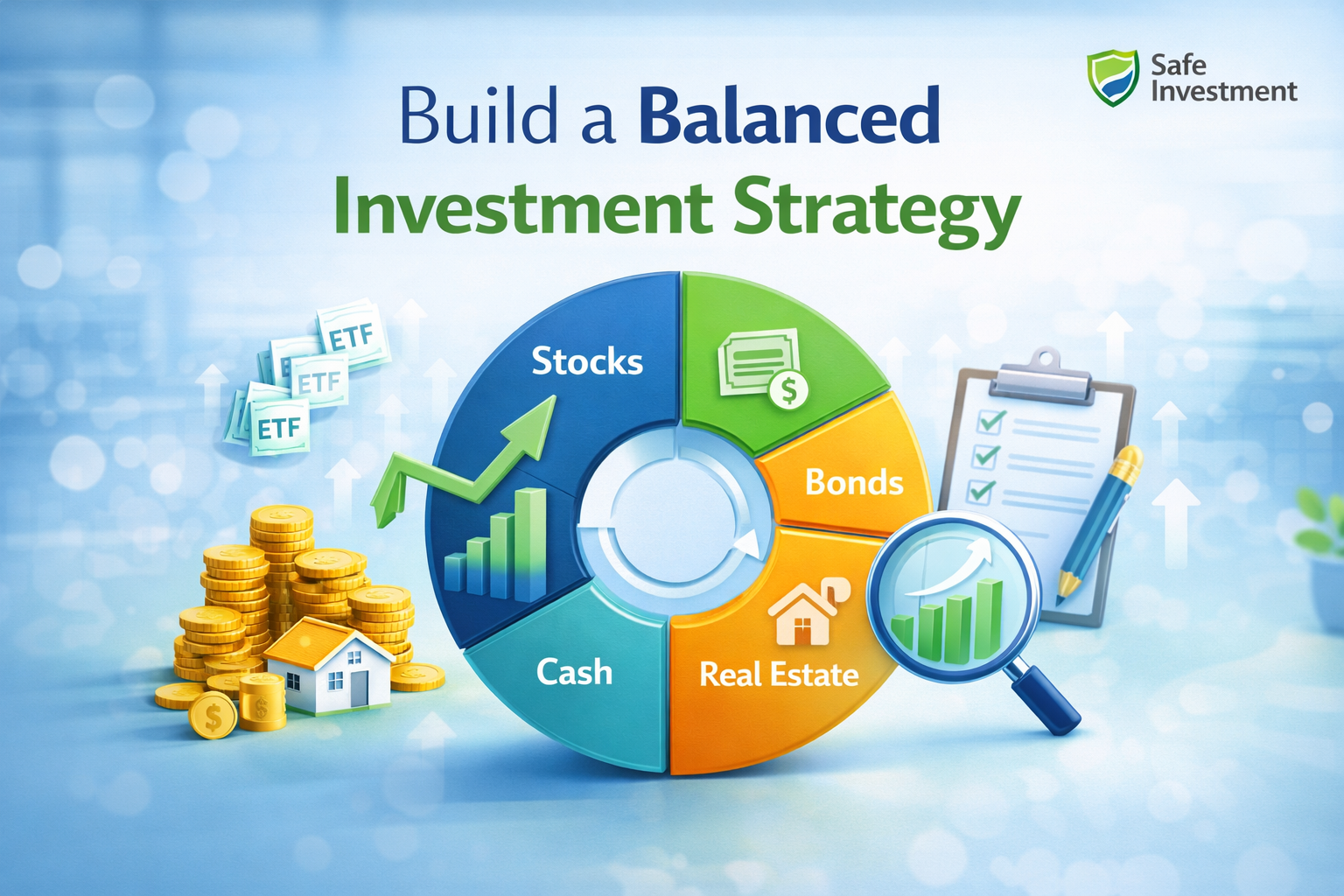
A portfolio is not just about owning multiple investments. It is about selecting the right combination of assets based on risk tolerance, time horizon, income needs, and investment objectives. A smart portfolio is designed to balance growth, stability, and flexibility.
An investment portfolio refers to the complete set of investments owned by an investor. These may include:
stocks
mutual funds
ETFs
bonds
gold
cash or liquid assets
real estate investment instruments
The purpose of a portfolio is to create a balanced approach to investing. Instead of depending on a single asset or sector, a portfolio spreads money across different investment types to reduce concentration risk.
Portfolio building is important because every investment carries some level of risk. When money is distributed across multiple assets, the impact of poor performance in one area can be reduced by stability or growth in another.
A well-managed portfolio can help:
reduce overall investment risk
improve diversification
align investments with goals
create long-term wealth
support regular income needs
maintain better financial discipline
Portfolio construction plays a major role in both beginner investing and advanced wealth management.
Asset allocation means deciding how much money to invest in different asset classes such as equity, debt, gold, and cash. This is one of the most important parts of portfolio design because it affects both risk and returns.
For example:
aggressive investors may keep a higher share in equities
conservative investors may prefer debt and fixed-income assets
balanced investors may combine growth and stability assets
Diversification means spreading investments across sectors, companies, instruments, and asset classes. A diversified portfolio reduces dependence on a single investment and helps lower unsystematic risk.
Diversification can happen across:
industries
market capitalization
geography
asset type
investment strategy
A good portfolio is built with risk management in mind. Investors should avoid overexposure to a single stock, sector, or theme. Portfolio risk should match the investor’s ability to tolerate price fluctuations and market uncertainty.
Every portfolio should be connected to financial goals. Some investors build portfolios for retirement, while others may focus on children’s education, home purchase, emergency funds, or wealth creation.
Goal-based investing helps in selecting the right assets and time frame.
A portfolio should not remain unchanged forever. Market movement can shift asset allocation over time. Regular review helps investors rebalance the portfolio and keep it aligned with the original strategy.
Rebalancing may involve:
reducing overweight assets
increasing under-allocated categories
replacing weak investments
adjusting based on changing goals
A growth portfolio focuses on capital appreciation. It usually contains a higher proportion of equities and growth-oriented assets. This type of portfolio may be suitable for long-term investors willing to accept more volatility.
An income portfolio is designed to generate regular cash flow. It may include dividend stocks, bonds, income funds, and fixed-income investments.
A balanced portfolio combines growth and income assets. It may contain a mix of equities, debt instruments, and other diversified investments.
A defensive portfolio is built to preserve capital and reduce volatility. It may focus on stable sectors, fixed-income instruments, and safer investment options.
Building a portfolio requires a structured approach. Investors should first understand their financial position and investment goals before choosing assets.
The general steps include:
identifying financial goals
understanding risk tolerance
deciding time horizon
selecting asset allocation
choosing investments carefully
reviewing the portfolio regularly
A portfolio should reflect the investor’s own needs rather than market noise or popular trends.
Many investors make portfolio mistakes that affect long-term results. Some of the most common ones include:
lack of diversification
chasing short-term returns
ignoring risk
investing without goals
overtrading
not reviewing the portfolio
emotional decision-making
Avoiding these mistakes can improve portfolio quality and financial confidence.
A well-built portfolio is one of the strongest tools for long-term wealth creation. It helps investors stay disciplined, reduce avoidable risk, and benefit from compounding over time. Rather than depending on a single winning investment, portfolio investing focuses on structure, consistency, and sustainability.
At Safe Investment, we aim to simplify portfolio learning so that investors can build smarter strategies and make informed financial decisions.
A portfolio is the backbone of any successful investment plan. Whether the objective is growth, income, capital preservation, or goal-based investing, a strong portfolio helps bring structure and balance to financial decision-making. With proper diversification, asset allocation, and regular review, investors can create portfolios that support both stability and long-term growth.
This content is for educational and informational purposes only. Safe Investment does not provide personalized investment advice, portfolio recommendations, or guaranteed returns. All investments are subject to market risks, and investors should do their own research or consult a qualified financial advisor before making any investment decisions.