By Safe Investment May 11, 2026
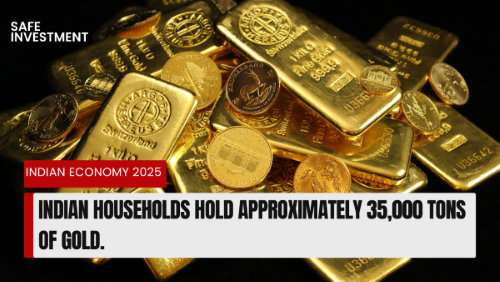
Gold has always been one of the most trusted assets in India. From weddings and festivals to long-term savings, gold is deeply connected with Indian culture, emotions, and financial security. For many families, buying gold is not just about jewellery — it is seen as a way to protect wealth and secure the future.
This is one of the reasons why India is among the world’s largest consumers of gold.
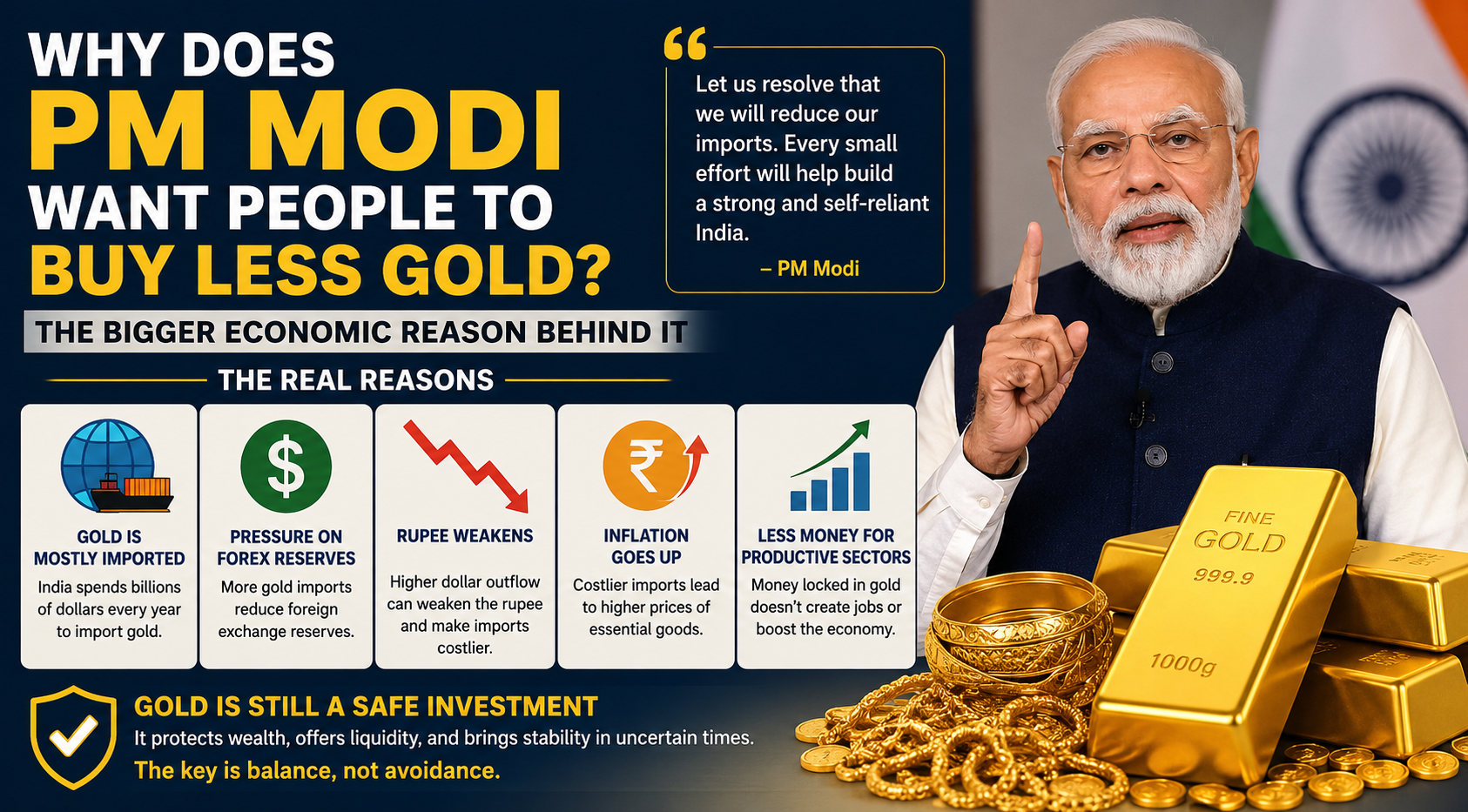
Recently, Prime Minister Narendra Modi appealed to people to reduce unnecessary spending, save fuel, and avoid excessive gold purchases. After this statement, many people started asking an important question — if gold is considered such a safe investment, why does the government want people to buy less of it?
The answer lies in the impact excessive gold imports can have on India’s economy.
One of the biggest reasons behind the government’s concern is that India produces very little gold domestically. Most of the gold used in the country is imported from foreign nations.
This means India has to spend US dollars to buy gold.
When millions of people purchase large quantities of gold, billions of dollars leave the country. At the same time, India also needs dollars to import many essential products such as:
If too much foreign currency is spent on gold imports, it can create pressure on India’s Foreign Exchange Reserves, also known as Forex Reserves.
Forex reserves are extremely important for any economy. They help maintain economic stability and allow the country to continue importing essential goods.
If dollars leave the country too quickly, the Indian rupee can weaken. A weaker rupee makes imports more expensive, which can increase the prices of:
Over time, this can increase inflation and raise the cost of living for ordinary people.
This is one of the main reasons why the government wants to reduce excessive dependence on gold imports.
Gold is still considered one of the safest investments in the world. During:
investors often move toward gold because it is seen as a “safe haven asset.”
Gold has historically managed to preserve its value over long periods of time. In India, it also serves as emergency financial security because it can easily be sold or used to obtain loans.
For individuals, gold provides:
However, from the government’s perspective, excessive gold buying can become an economic challenge because large-scale imports increase pressure on foreign currency reserves.
Economists often describe physical gold as an “unproductive asset” because it usually stays locked in lockers or is used as jewellery.
When money is invested in:
it helps create jobs and supports economic growth.
But physical gold does not directly generate production or employment. This is why governments often encourage people to invest at least part of their savings into productive sectors that contribute to the economy.
Many people ask why the government does not simply increase taxes to discourage gold purchases.
In reality, the government already uses import duties to control gold imports. However, making gold extremely expensive can create new problems such as:
India’s jewellery sector supports millions of jobs, so very strict restrictions on gold can also affect businesses and workers.
Experts believe PM Modi’s message is mainly about protecting India’s economy from unnecessary pressure and encouraging balanced financial habits.
The government is not asking people to completely stop buying gold. Instead, it wants citizens to avoid excessive dependence on gold and adopt smarter, more balanced investment strategies.
Gold continues to be one of the most trusted and safest investments in India. Its emotional value, long-term stability, and ability to protect wealth make it extremely popular among Indian families.
However, excessive gold imports can also put pressure on India’s foreign exchange reserves and economy. That is why the government encourages people to spend carefully and invest wisely.
In the end, gold can protect personal wealth, but a strong economy protects the future of the entire nation.
Your email address will not be published. Required fields are marked *